

Gold is prized for more than its luxurious look in jewelry and furnishings. It’s also the top choice for electrical connectors and contacts in industries like electronics, medical devices and aerospace.
Gold delivers superior electrical conductivity, corrosion and wear resistance, and excellent solderability for a wide range of applications.
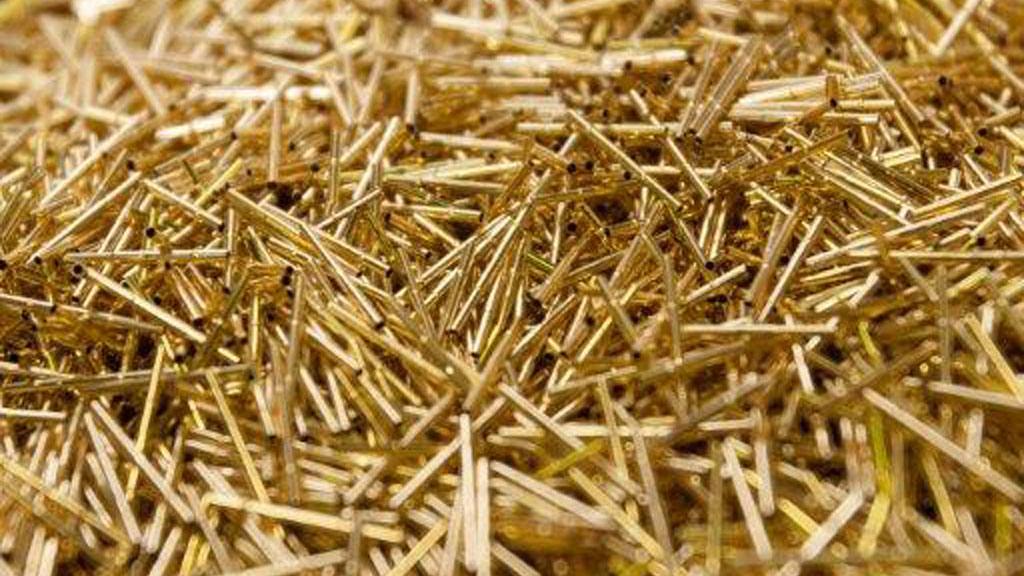
Benefits of Gold Electroplating
For your products, gold offers several key advantages:
- Corrosion & Wear Resistance: Naturally resists corrosion, wear and tarnishing
- Conductivity: Provides unmatched signal, data and power transmission
- Solderability: Forms strong, reliable connections – even in low-voltage applications
- Durability Through Alloys: While pure gold is soft, combining it with other metals like nickel creates a harder, more wear-resistant finish
At American Electro Products, we plate gold onto various components to ensure optimal performance and longevity.
Our Services
American Electro Products offers a range of tailored gold plating services, including:
- Customized Coating Thickness: We determine the optimal thickness for your application – especially for parts subject to constant contact.
- Selective Barrel Plating: Precisely deposits gold where it’s needed, ensuring consistent quality across all parts.
- Re-Plating: Restores worn, chipped or dull gold finishes, revitalizing the appearance and performance of your components.
How Gold Electroplating Works
Gold electroplating creates a chemical bond between the substrate (the original part) and the gold finish. The process involves submerging the part in an electrolyte solution charged with an electrical current. Metal ions in the solution deposit onto the part’s surface – the longer it remains in the solution, the thicker the coating becomes.
Because gold doesn’t easily bond to every metal and is inherently soft, an undercoating is applied first. This process includes:
- Final Gold Plating: Depositing one or more layers of gold over the undercoated surface. For example, plating a silver substrate may involve adding copper and nickel layers first to prevent tarnishing and extend the gold finish’s lifespan.
- Surface Preparation: Thoroughly polishing the substrate to remove impurities like dirt, oils and debris that could affect how gold bonds.
- Electrocleaning: Using techniques like steaming or ultrasonic cleaning to eliminate any residual contaminants after polishing.
- Underplating: Applying a layer of nickel, cobalt or titanium nitride (often with additional strike and buffer layers) to enhance hardness and adhesion.