

A Reliable Solution for Electroplating Needs
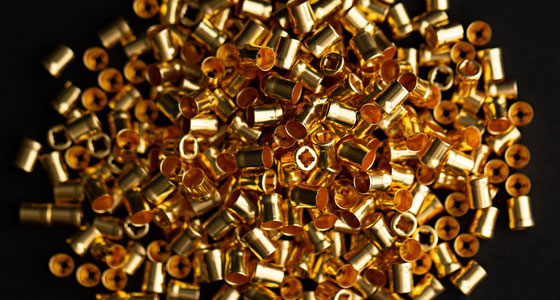
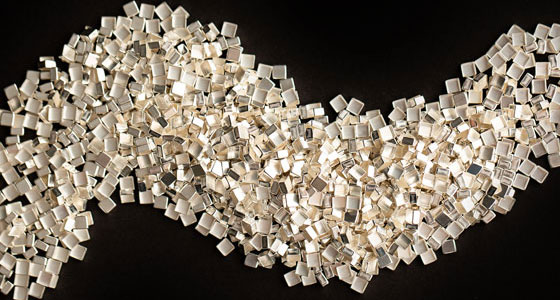
Barrel plating is a highly cost-effective method to electroplate loose piece manufactured parts to meet specific requirements like corrosion resistance and electrical properties. This technique can handle high volumes of small or varied metal parts, making it ideal for improved durability and performance.
- Cost-Effective for High-Volume Production
- Uniform Coating & Superior Coverage
- Ideal for Small, Complex Parts
What Is Barrel Plating?
Barrel Plating originated in the post-Civil War years. The earliest electroplating units were made of wood, which was the most highly available non-conductive material at the time. However, wood posed problems with rapid deterioration and solution absorption. After World War II, plastic became more readily available and made barrel plating a much easier and far more efficient technique.
Today’s barrels are made of polypropylene or similar non-conductive materials. These perforated, cylindrical barrels are submerged in an electrolytic solution and rotate horizontally, causing the parts inside to tumble and come in contact with one another.
As this happens, a low-voltage electrical current flows through the unit, applying a uniform coating with good adhesion to the underplate or base metal.
This approach:
- Evenly applies the coating across all contained parts
- Improves corrosion resistance
- Enhances the appearance of parts
- Protects parts against wear and tear
- Is ideal for plating a large number of small machined, stamped or drawn parts
- Accommodates different shapes and sizes of parts
These properties make barrel plating ideal for improved corrosion resistance of various metal parts, adding decorative finishes, and enhancing durability with an engineered finish.
Learn more about all types of electroplating techniques to determine the best one for your job.
What We Do
American Electro Products uses rotary barrels with straight bars or danglers for anodes, depending on the geometry of parts being plated. We have various size units that can be used based on part volume.
Explore our full range of capabilities to see how we can best handle your request.
Barrel Plating Finishes
- Copper (Cu)
- Electroless Nickel (Ni-P)
- Gold (Au)
- Nickel (Ni)
- Palladium (Pd)
- Palladium-Nickel (Pd-Ni)
- Rhodium (Rh)
- Silver (Ag)
- Tin (Sn)
- Tin Lead (Sn-Pb)
Components We Barrel Plate Include:
- Connectors
- Pins
- Sensors
- Stamped Terminals
- Terminals
- Switches
- And more…
AEP Plates to the Following Specifications:
These plating services may be provided to any of the following specifications:
AMS
- AMS 2403
- AMS 2404
- AMS 2410
- AMS 2418
- AMS 2422
- AMS 2424
- AMS-C-26074
- AMS-P-81728
- AMS-QQ-N-290
- AMS-QQ-N-290B
ASTM
- ASTM B200
- ASTM B488
- ASTM B545
- ASTM B634
- ASTM B679
- ASTM B689
- ASTM B700
- ASTM B733
- ASTM B734
- ASTM B867
MIL
- Mil-C-26074
- Mil-DTL-45204
Advantages of Barrel Plating
Selecting the right electroplating method is key to achieving the best results, while protecting the integrity of the finished product.
Barrel plating offers the following benefits:
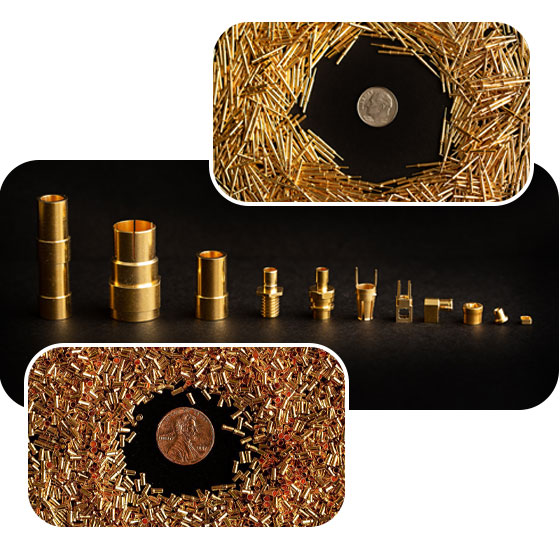
- Great for high-volume runs where complete coverage is required
- Can apply a range of finishes, including Gold, Silver, Palladium, Rhodium and more
- Ideal for numerous different stamped and machined part configurations.
Compare the different types of electroplating methods.
What About Parts That Stick Together or Nest?
Can AEP Help with This?
We absolutely can. Not all components are candidates for traditional barrel plating. Larger, heavier parts can get dented or dinged due to the tumbling motion. Flat parts tend to stick together, preventing the metal from depositing over the whole part. Due to the dimensions of some parts, “nesting” or clumping together can occur in a rotating barrel. Other parts may be too delicate to be plated in a barrel and end up being bent or deformed. Learn more about all types of electroplating techniques to determine the best one for your job.